1900 – 1950
Kurt Weill — Youkali's composer
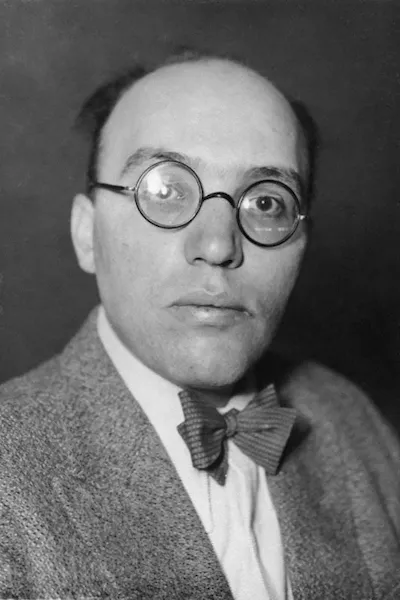
The music of Youkali is by the German-American composer Kurt Weill, who wrote it in Paris in 1934. Weill was born in Dessau on 2 March 1900, into a Jewish family, the son of the cantor of the city’s synagogue. He moved to Berlin to study composition with Engelbert Humperdinck and then, at the Hochschule für Musik, with Ferruccio Busoni — the teacher he admired most.
Berlin
The Weimar Republic gave Berlin its most contradictory and most creative years. Weill earned a living playing piano in cafés before working as a répétiteur and conductor in theatres. His first stage operas — Der Protagonist (1926) and Der Zar lässt sich photographieren (1927), both on libretti by Georg Kaiser — were expressionist in tone and political in content, written for a popular audience in a deliberately simplified musical language.
In 1926, aged twenty-six, Weill married Lotte Lenya, an Austrian dancer, singer and actress who would become the first and most enduring interpreter of his songs. The year after his marriage came the encounter that changed his work: he met Bertolt Brecht.
The Brecht collaboration ran from 1927 to 1930. Its high point was Die Dreigroschenoper (The Threepenny Opera), which premiered in Berlin on 31 August 1928 — two hundred years after John Gay’s The Beggar’s Opera, on which it was based. It became the largest theatrical success of the Weimar Republic. The pair went on to write Aufstieg und Fall der Stadt Mahagonny (1930). During its composition their ideological differences became impossible: Brecht’s deepening communism pushed his theatre towards didacticism; Weill refused to be relegated to a secondary role within it.
Paris
When the Nazis took power, the Brecht-Weill works were among the first to be banned and burned. Brecht left the day after the Reichstag fire; Weill followed on 21 March 1933, alone — Lenya had filed for divorce in January, and the decree came through in Potsdam that September. She came to Paris nonetheless, and that spring the estranged pair and Brecht finished one last collaboration: the sung ballet Die sieben Todsünden (The Seven Deadly Sins), written for George Balanchine’s company, with the singing role of Anna I written for Lenya. It premiered at the Théâtre des Champs-Élysées on 7 June 1933.
The following year Weill wrote the incidental music for Jacques Deval’s play Marie Galante. One of those numbers — initially an instrumental tango habanera — would later carry the words of Roger Fernay and the name Youkali.
America
In September 1935 Weill arrived in New York and there he stayed. Lenya followed, and in 1937 the two married again; she remained his interpreter for the rest of his life and long after it. He set aside “serious” composition and politically charged music theatre for the American popular song, for Broadway and for jazz — a turn many European intellectuals at the time read as betrayal. Weill kept his motto, “Ich schreibe für meine Zeitgenossen” — I write for my contemporaries — and worked to dissolve the wall between cultivated music and popular song while keeping the work in the service of his ideals: against war, against injustice, for ordinary lives.
His American works are now standard. Knickerbocker Holiday (1938) gave “September Song”, which became one of the most recorded jazz standards of the century. Lady in the Dark (1941, libretto by Moss Hart, lyrics by Ira Gershwin) starred Gertrude Lawrence and launched Danny Kaye. One Touch of Venus (1943, libretto by S. J. Perelman and Ogden Nash) starred Mary Martin and gave the standard “Speak Low”.
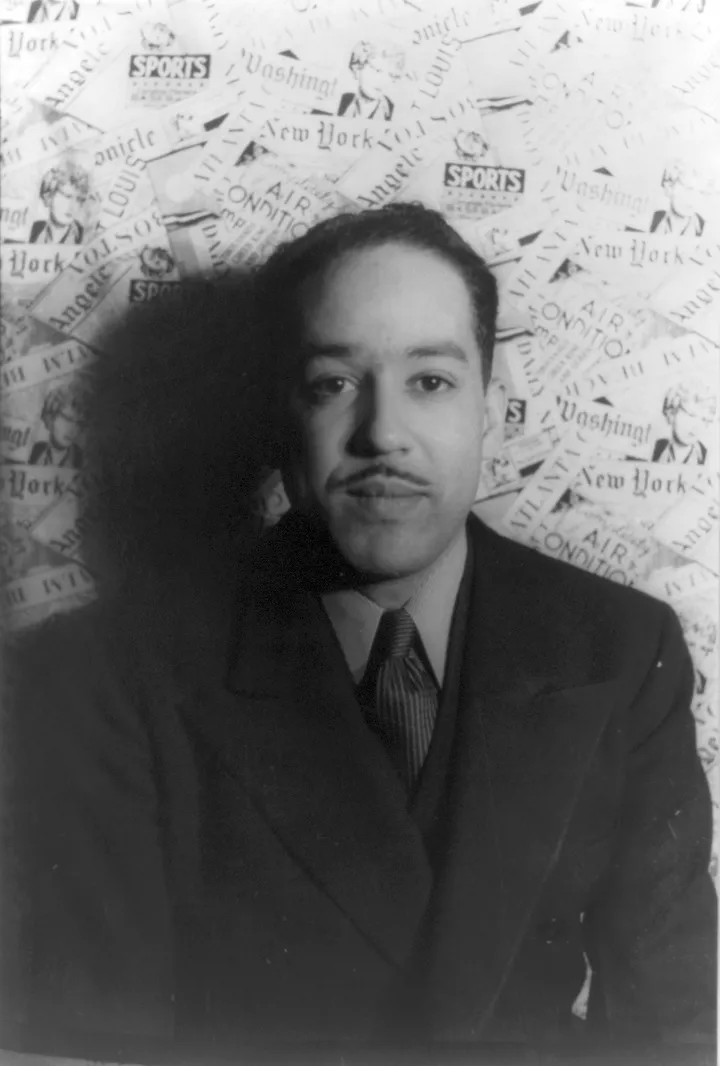
Street Scene (1946) — adapted from Elmer Rice’s play, with song lyrics by Langston Hughes — Weill called a “dramatic musical” or “American opera”; from it comes “Lonely House”. Down in the Valley (1948) reworked folk songs of Kentucky. Love Life (1948) was written with Alan Jay Lerner. Lost in the Stars (1949), a “musical tragedy” with Maxwell Anderson on a libretto adapted from Alan Paton’s novel of South African racial oppression Cry, the Beloved Country, gave “Train to Johannesburg” and the title song.
Weill died in New York on 3 April 1950, aged fifty. He left unfinished an “American folk opera” he had been writing with Maxwell Anderson, adapted from Mark Twain’s The Adventures of Huckleberry Finn.
Recordings often cited
Among the Weill recordings most often cited in concert programmes and critical writing are Teresa Stratas’s albums The Unknown Kurt Weill and Stratas Sings Weill, the compilation Lost in the Stars (with Sting, Marianne Faithfull, Lou Reed and others), and Ute Lemper’s Weill recordings.