A short compendium for people who programme and perform
Youkali on the stage
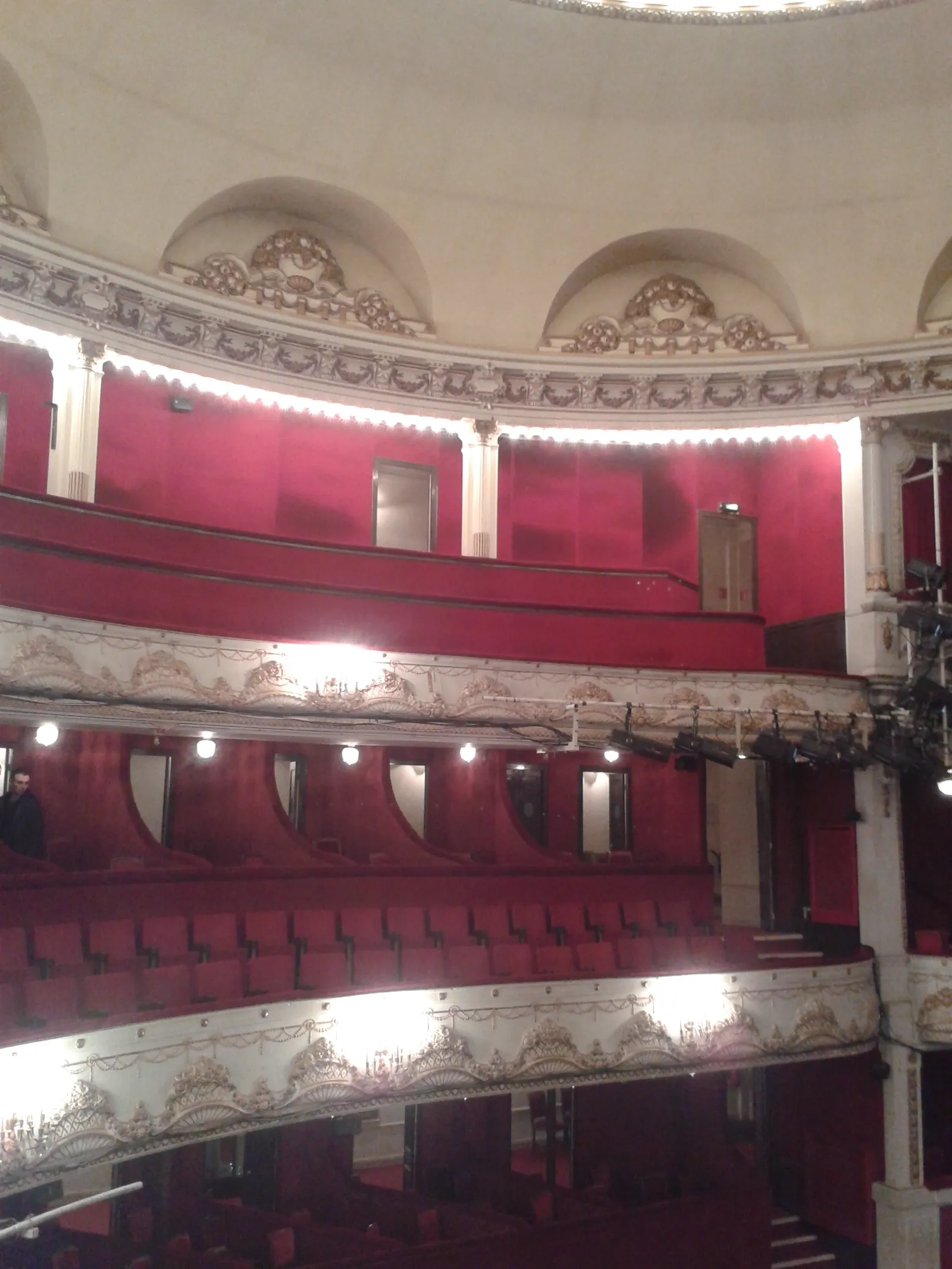
A short, partial compendium of the contexts in which Youkali has appeared on stage and on record, gathered for people who programme and perform — directors, dramaturgs, singers, accompanists, music programmers. It is offered as company, not as guidance: the song belongs to whoever takes it up next.
In spoken theatre
The song was born inside a play. Jacques Deval’s Marie Galante opened at the Théâtre de Paris on 22 December 1934 with Weill’s incidental score; in the original production Youkali appeared as an instrumental tango. Fernay’s words were added in 1935. It has since travelled in and out of plays about
- exile, statelessness and displacement;
- love at a distance, vows kept across separation;
- ageing, memory, the gap between life and what one hoped from life.
It has been used as an entr’acte, as an offstage voice, as the last music heard before the lights come down.
In cabaret
The song has a long life in cabaret programming, most often near the close of an evening. Frequent companions on cabaret programmes:
- darker Brecht-Weill songs — Surabaya Johnny, Pirate Jenny, Bilbao Song — among which Youkali is often the one that allows itself, briefly, to dream;
- other Weill exile-period songs — Je ne t’aime pas, Complainte de la Seine (both Paris, 1934);
- songs by Hanns Eisler, Friedrich Hollaender, Jacques Brel.
In recital programmes
In recital it has appeared alongside French mélodie (Fauré, Poulenc, Reynaldo Hahn, Debussy), and as part of all-Weill or Weimar-era programmes. Teresa Stratas, Ute Lemper, Anne Sofie von Otter, Dee Dee Bridgewater and others have all programmed it both as a stand-alone and as part of larger Weill sets.
In film
Larry Weinstein’s documentary September Songs — The Music of Kurt Weill (Rhombus Media, 1994) presents Teresa Stratas’s Youkali with archival material from Weill’s life. The song has also appeared as source music in a small number of feature films.
In dance and devised work
Choreographers have used the tango habanera as the rhythmic frame for duet work; theatre companies have used the song’s two-part structure — the building of the island and the « il n’y a pas de Youkali » turn — as material for devised pieces on hope and disenchantment. Documentation is scattered; many of these uses live only in production archives.
Materials and rights
- The composition entered the public domain on 1 January 2021 in life-plus-seventy jurisdictions; Weill died on 3 April 1950.
- Roger Fernay’s French text remains in copyright in the same jurisdictions until 1 January 2054 (Fernay died in 1983).
- Specific recordings remain under their own neighbouring rights.
For downloadable music — a free lead sheet (melody and chord symbols, no lyrics) and a link to the full Heugel 1946 piano-vocal edition with bass clef — see the Score page.
Score and edition
- Heugel (Paris) published the 1946 piano-vocal edition; the rights are administered today by European American Music Corporation, and the work is catalogued at Wise Music Classical.
- The Kurt Weill Foundation for Music (New York) maintains the critical materials and a research library, and is the canonical first stop for programming and rights questions.
- The Oxford Song archive keeps a short catalogue entry, useful mainly as a record of the song’s recent recital programming at the Oxford International Song Festival.
For a survey of recorded interpretations, see Interpretations.